The Mid-Iron Pilgrimage: Nine Muddy Holes, One Club, No Escape
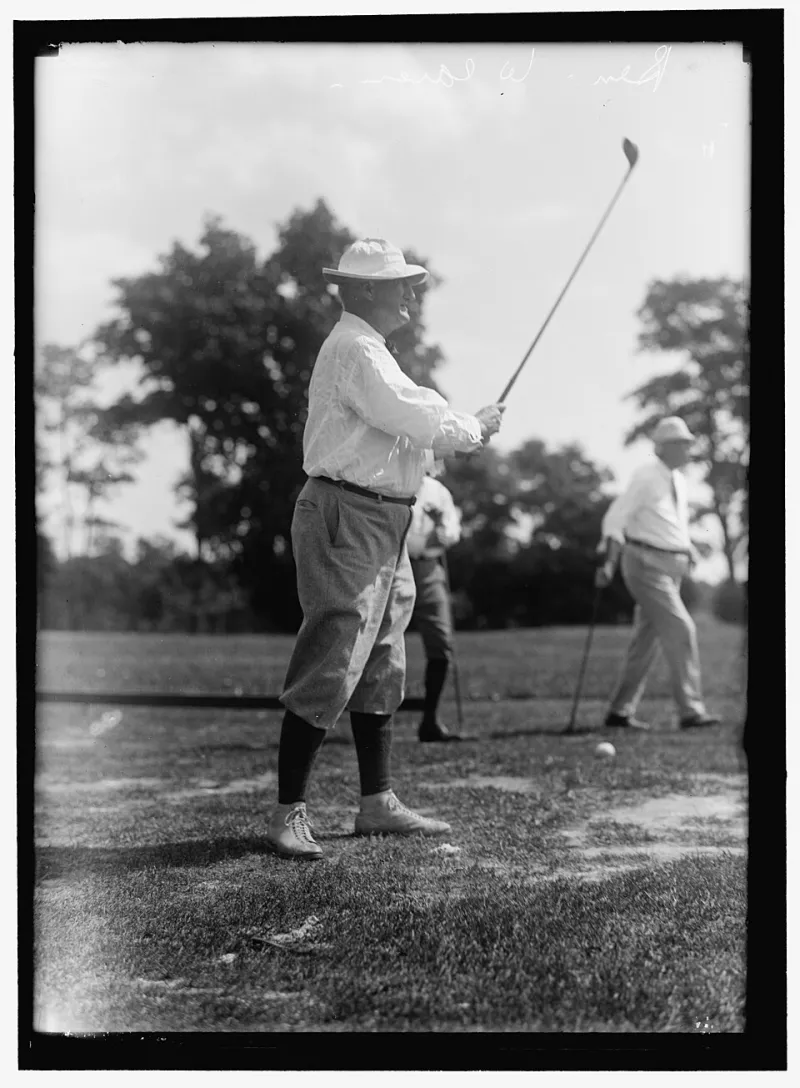
Photo: Harris & Ewing, photographer, Public domain, via Wikimedia Commons
There is a particular kind of honesty in a winter golf course. The fairways are soft, the rough is thin, the ball plugs, and your usual excuses get muddy very quickly. Now take away every club except one mid-iron. No driver to bail you out. No wedge to rescue a poor tee shot. No putter to tidy up the mess. Just you, a 6- or 7-iron and nine holes of British winter golf.
This is not a stunt. It is a practice challenge. The one-club round strips away selection and forces you to commit to a shot, make a swing and live with the result. It is especially useful in November and December, when the 2026 season has gone quiet, the range feels repetitive and your full bag is starting to look like a collection of get-out-of-jail cards.
The rules: one club, nine holes, zero excuses
Pick a mid-iron you actually use. A 6-iron is a good default for most UK nine-hole courses; a 7-iron is fine if the course is short or you want a little more control. Check the weather and the ground. If it is properly boggy, take the club you can advance the ball with rather than the one that looks heroic in the bag.
Play nine holes from the forward tees. Use a tee on the first shot of each hole if you like, but after that the ball is played as it lies, subject to any winter preferred-lies rule the club has in place. You may putt with the mid-iron. Yes, really. Blade it, chase it, or use a putting-style stroke from the fringe. The point is that you have one club and you have to solve the hole with it.
Set a scoring format before you start. Stableford is kinder than strokeplay and keeps the round moving. Give yourself a maximum of triple bogey or zero points per hole so one muddy disaster does not swallow the whole exercise. Count every shot, including putts. If you want a simple metric, note your score and the number of shots you would describe as genuinely committed.
How to score it without turning it into a grind
Do not turn this into a grim test of endurance. The aim is to observe, not to punish yourself. Play at a normal pace, let faster groups through and keep the ball in play. If the course is busy, play six holes instead of nine. The challenge works at any length.
Before each shot, say the shot out loud or in your head: low runner, high fade, chip, putt. Then commit. The mid-iron will not always cooperate, but the intention will tell you a lot. If you stand over the ball with no plan, the club is not the problem. You are.
Use a simple scorecard. Mark the hole, the club used, the lie, the intended shot, the result and a one-to-five rating for commitment. Add a note for tempo. Was that a smooth swing or a lash? Did you decelerate on the chip? Did you try to hit the hero recovery when a boring sideways nudge was available?
What to log after every hole
The log is where the round earns its keep. After each hole, write down one sentence about what happened. Not a technical essay. Just the truth. For example: tried to hit a 7-iron 160 yards out of wet rough, came up short, then rushed the chip. Or: smooth swing off the tee, accepted the result, two-putted with the blade.
Look for patterns rather than one-off disasters. Does your tempo get quicker when you have a long shot into a green? Do you decelerate when you are trying to be careful? Do you aim at flags you cannot reach? Do you get creative or do you freeze?
The one-club round also exposes your course management. Without a wedge, you cannot automatically throw the ball up in the air. Without a putter, you have to think about speed and line differently. Without a driver, you have to accept where the ball goes. That is useful information for the full-bag rounds waiting in spring.
The mistakes the challenge reliably exposes
First, over-swinging. Most players try to hit the mid-iron farther than they should, especially off the tee. The result is a loss of balance and a strike low on the face. Second, deceleration. When you have no club to rescue you, the temptation is to steer the ball. That is fatal with a mid-iron, particularly on chips and putts.
Third, hero golf. The one-club round makes the sensible shot obvious, but plenty of players still attempt the low-percentage escape. Fourth, poor target selection. If you cannot reach the green, do not aim at it. Leave yourself a distance you can actually play with the club in your hand.
Finally, there is the mental mistake: treating the challenge as a test of the club rather than a test of you. The mid-iron is not good or bad. It is a tool. The round is there to show you how you behave when the easy options are gone.
Taking the lesson back to a full bag
The value comes when the fairways dry out and you have fourteen clubs again. Keep two things from the one-club round: a committed pre-shot routine and a realistic idea of what your stock shot is. The next time you stand over a 7-iron with a full bag, remember how simple it felt when there was no alternative.
You can also steal the scoring idea. Once a month, play a few holes with a half-set or a single club. It resets your expectations and makes the full bag feel generous again. In a UK winter, when conditions are soft and scores can drift, that is a useful mental refresh.
One club, nine holes, no escape. It will not make you a better golfer by itself. But it will show you what to work on when the range lights come back on and the 2026 season gets moving again.