The Coastal Six: Clubs That Quietly Win British Wind Battles

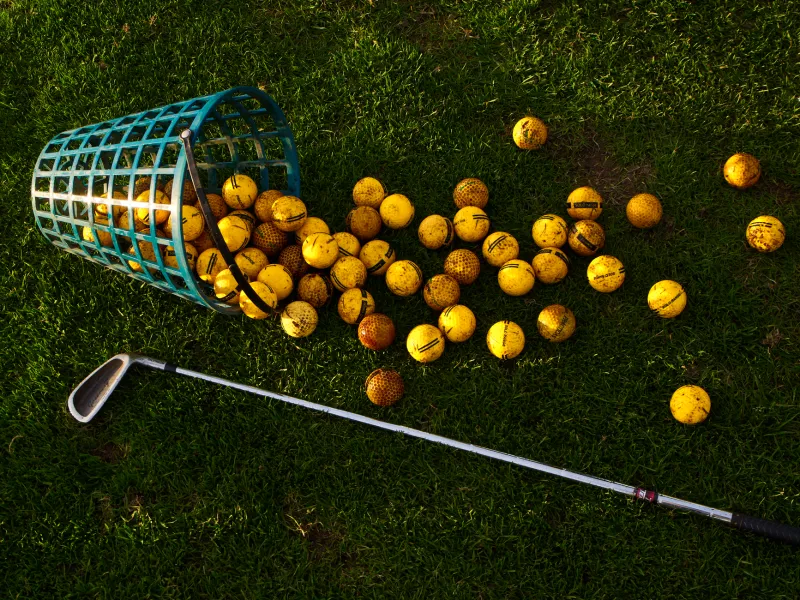
Photo: State Government Photographer, CC0, via Wikimedia Commons
A British coastal round has a way of exposing a bag. The driver that looks brilliant in a simulator can balloon into the wind. The wedge that feels lovely on a soft parkland course can bounce off a tight links lie. The putter that rolls beautifully on a flat indoor green can wobble when the wind is tugging at your waterproofs.
So this is not a list of the shiniest 2026 gear. It is a wind-bag audit: six club choices that earn their place when the forecast says 20mph gusting 30, the turf is tight and the rain is coming in sideways. We have kept the criteria practical, because most UK amateurs are buying with one eye on value and the other on a Saturday medal.
How we would test a wind bag in 2026
First, pick a day with a real crosswind, not a gentle breeze. A 15 to 20mph wind is enough to separate clubs that hold their line from clubs that float. Second, test from wet, tight links-style turf as well as a range mat. Third, watch the carry spread, not just the best strike. A club that flies 12 yards shorter into the wind but keeps its line is often more useful than a longer club that sprays.
We would also look at descent angle, shaft weight and how the club behaves on off-centre hits. Coastal golf is not a centre-strike contest. It is a miss-management contest. Finally, we would check the price against previous-generation alternatives. In 2026, the value gap between the newest release and last season's model is still wide enough to matter.
1. A low-spin driver that does not demand a perfect swing
Into a stiff off the Irish Sea, high spin is the enemy. A low-spin driver head with a forward-ish centre of gravity helps keep the flight down, but the best choices for UK amateurs are the ones that retain forgiveness across the face. Look for adjustable loft, a stock shaft that is not too light and a head shape that does not look like a thimble behind the ball.
On-course scenario: a 430-yard par four with a helping crosswind and a narrow fairway. You need carry, but you also need the ball to land and stop rather than skip into the rough. A low-spin driver with a slightly heavier shaft is often the calmer choice.
Value note: previous-generation heads with the same adapter system are the smart buy. Spend the savings on a proper fitting.
2. A strong 4-wood for long par fours and second shots into wind
A 3-wood is a lovely thing until you need to hit it off a tight links lie with the wind in your face. A strong 4-wood, around 16 to 17 degrees, tends to launch a little easier and still keeps a sensible flight. A shallow face helps from tight turf, and a compact head is easier to control when the ball is above or below your feet.
On-course scenario: a 210-yard second into a par five on a wet morning. You want height, but not ballooning height. A 4-wood with a mid-launch shaft is a useful compromise.
Value note: do not overlook women's or senior flex options if your swing speed has changed. They are often cheaper and can be exactly the right weight for a windy links round.
3. A utility iron that replaces the hybrid in crosswinds
Hybrids are brilliant for soft conditions and high launch, but a low, penetrating utility iron can be a better weapon when the wind is doing its worst. Look for 18 to 21 degrees, a sole that is not too wide and a shaft that matches your iron set rather than your driver. The aim is control, not a 250-yard miracle.
On-course scenario: a tee shot on a short par four where the fairway narrows at 220 yards. A utility iron keeps the ball under the wind and reduces the left miss that some hybrids encourage.
Value note: the used market is full of utility irons from the last few seasons. Check the lie angle and shaft weight before buying.
4. A cavity-back mid-iron for knock-downs
A full set of blades is not the answer for most UK amateurs in the wind. A cavity-back mid-iron, especially in the 5 to 7 range, gives you a little more forgiveness on toe and heel strikes while still letting you flight the ball down. The key is to avoid huge offset if you already fight a hook.
On-course scenario: a 150-yard approach into a gusting crosswind. You want to take one more club and make a three-quarter swing. A cavity-back mid-iron is more forgiving when you catch it slightly thin.
Value note: do not buy a whole new set if only the long irons are misbehaving. A couple of individual cavity-back irons can be the cheaper fix.
5. A mid-bounce wedge that handles wet sand and tight turf
Wedge bounce is the most misunderstood part of the coastal bag. Too little bounce and the club digs in wet sand; too much and it bounces off tight links turf. A mid-bounce wedge, roughly 10 to 12 degrees in a sand wedge, is the sensible starting point. A versatile grind helps, but do not pay extra for a grind you cannot use.
On-course scenario: a greenside bunker with wet, compacted sand and a firm lip. You need the sole to skim rather than dig. A mid-bounce wedge with a slightly rounded leading edge is a reliable choice.
Value note: wedge grooves wear out, but a lightly used premium wedge is often better value than a brand-new budget wedge.
6. A stability-first putter for windy, grainy greens
Coastal greens are rarely indoor-smooth. They can be grainy, exposed and quick. A high-MOI mallet or a heavier-headed putter helps keep the face stable when the wind is moving your trousers. A counterbalanced grip can also calm the stroke, especially on long putts.
On-course scenario: a 30-foot putt across a links green with the wind pushing at your back. You want a putter that does not twist on a slight toe strike. Stability matters more than a pretty finish.
Value note: last year's mallet model with the same face technology is usually the bargain. Spend the difference on a putter fitting if you can.
The coastal six are not about buying your way out of bad weather. They are about stacking the odds. A lower-spinning driver, a friendly 4-wood, a utility iron, a forgiving mid-iron, a sensible wedge and a stable putter will not make the wind disappear. They will make it easier to play the shot you actually need.