Cold Rubber, Quiet Thwack: Why Your Shed-Stored Ball Lies to Your Ears
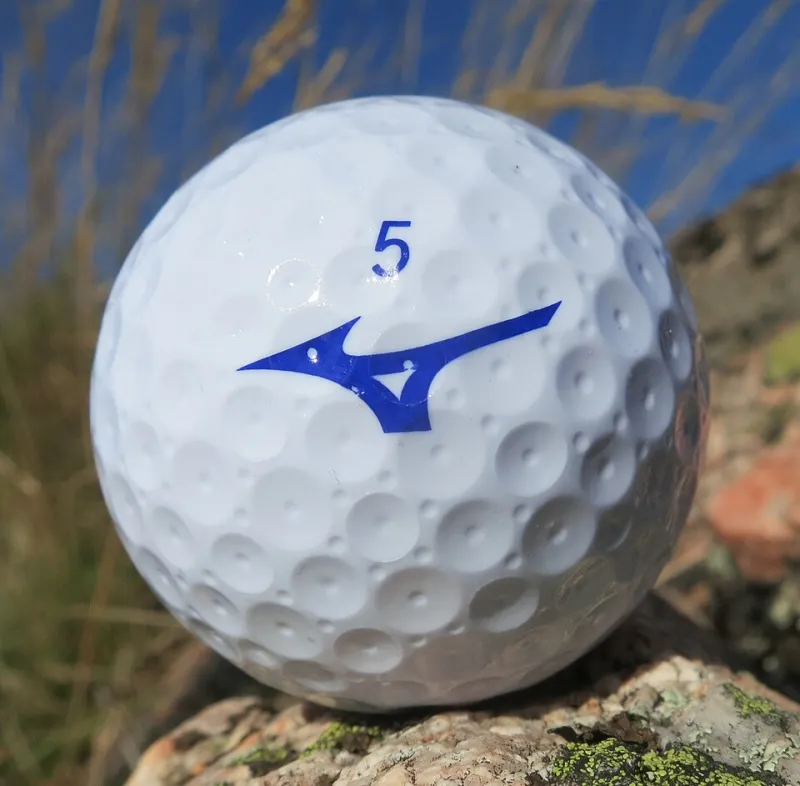
Photo: R. Henrik Nilsson, CC BY 4.0, via Wikimedia Commons
There is a particular sound that greets UK golfers in November. You open the shed, pull out the practice bag, and the first ball you drop on the mat feels like a marble that has been left in the fridge. You make a decent swing, catch it flush, and the club says... not much. A flat little thwack. No zip. No snap. Just the audio equivalent of a shrug.
That is the cold-ball effect, and it is one of the easiest ways to misread your own strike during winter. The ball has spent the night in a garage or shed that is colder than you think, and now it is lying to your ears. Not maliciously. It is just physics doing its thing. But if you are using sound and feel to judge contact, you need to know when the ball is the unreliable witness.
Why a frosty ball sounds flatter
A golf ball is not a lump of dead plastic. Its cover, mantle and core are designed to work together, and temperature changes how that little system behaves. A cold ball is firmer. It does not deform against the face in quite the same way, and the sound it makes is shorter, duller and less lively. You may still get a good strike, but the feedback arrives with the volume turned down.
With irons, that can make a solid contact sound suspiciously like a slightly heavy one. With a putter, especially an insert-faced model, a cold ball can turn a crisp tick into a muted tock. The ball is not necessarily doing anything wrong. It is just too cold to sing.
This matters because most of us use sound as a quick check. A sharp sound says good. A dull sound says check your contact. In winter, that shorthand needs a caveat. The ball itself has changed the acoustics before you have even swung.
Your garage is not a neutral witness
UK garages and sheds are brilliant at hiding temperature swings. They can be mild in the afternoon and genuinely Baltic by midnight. They also tend to be damp, which adds another variable. Balls stored on a concrete floor or against an outside wall will soak up the cold faster than balls kept in a cupboard indoors.
The car boot is no better. It is basically a metal shed on wheels. If your balls have been living in the boot since the last roll-up, they have been through every frost and thaw of the past week. That is fine for a knockabout, but it is not a fair test of your strike.
So before you blame your swing, ask where the ball has been. A ball that has spent the night at four or five degrees Celsius is not the same ball that comes out of a house at eighteen degrees. Same model, different voice.
Warming balls without cooking them
The sensible move is boring: let them come up to room temperature gradually. If you know you are practising or playing, bring a sleeve or two indoors the night before. Keep them in a normal room, not on top of a radiator. Do not microwave them. Do not dunk them in hot water. Do not leave them on a sunny windowsill and assume that counts as a spa day.
On the day, keep a few balls in your jacket pocket and rotate them. Body heat is gentle and slow, which is exactly what you want. If you are playing a winter round, swap the ball every few holes and let the cold one come back to life in your pocket. It is not a perfect system, but it keeps the worst of the chill off.
For range sessions, accept that range balls are their own category. They have been sitting in a cold dispenser, they are often tired, and they do not owe you a reliable sound. Use them for movement and contact, not for fine-tuning your ears.
The five-minute driveway ear test
This is the practical bit. You do not need a launch monitor or a studio. You need two sets of the same ball model: three that have been in the shed overnight and three that have been indoors. Then give yourself five minutes on a driveway, patio or safe short-game area. No full shots into the neighbour's conservatory, please.
Start with putting. Place one cold ball and one warm ball on the same spot and hit the same length putt to a marker. Listen for the difference in pitch and length of sound. The warm ball should sound a little livelier, maybe a touch higher and more compact. The cold ball will often sound flatter and shorter. Do not judge the roll from one putt. Just notice the voice.
Then move to a short chip or half wedge into a net. Alternate cold and warm balls. Say one word after each strike: crisp, dull, heavy, thin, solid. Keep it simple. You are not building a database. You are training your ear to expect a difference.
Finally, hit three warm balls in a row and three cold balls in a row. If the warm ones sound noticeably better on what feels like the same contact, you have your answer. The ball was the variable. Your swing was probably fine.
What to do with that information
If the cold balls sound dull and the warm balls sound normal, trust the warm balls. Use the cold ones as a calibration tool, not a verdict. If both sound dull, then it is worth checking your strike pattern or contact. If the warm balls also sound off, that is a more honest signal.
The bigger lesson is to keep your winter practice honest. Store your gamers indoors. Rotate balls in your pocket. Use the same model when you are comparing sound. And do not chase a perfect thwack from a ball that has been shivering in a shed since Thursday.
Acustrike is all about listening to the strike, but listening well means knowing what else is in the recording. In a UK winter, the cold garage is often the loudest thing in the room. Warm the ball, reset your ears, and then judge the swing.