Fifteen Minutes in the Clubhouse: A Frost-Delay Routine for Sharper First Swings

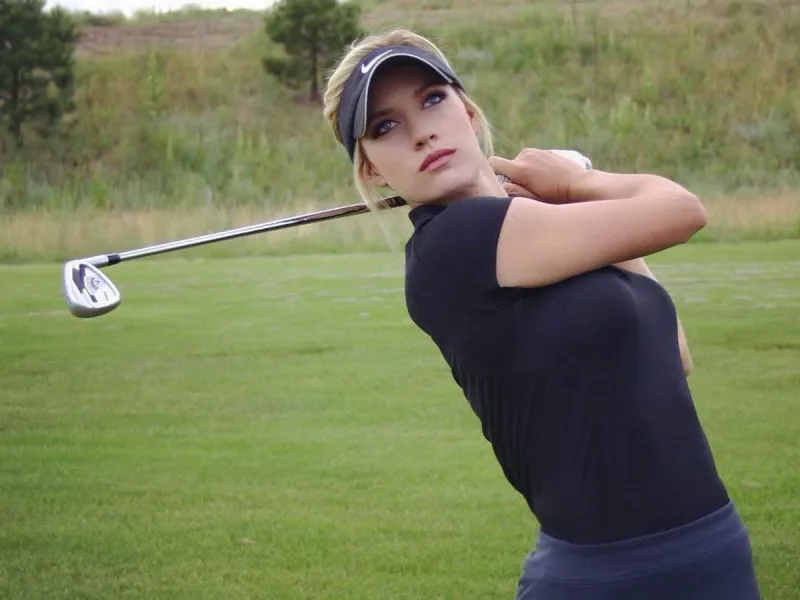
Photo: PattayaPatrol, CC BY-SA 4.0, via Wikimedia Commons
There is a particular kind of November morning at a UK club where the car park is full, the practice green is white, and nobody is going anywhere. The frost delay board goes up. Someone says it will be an hour. Someone else says it will be twenty minutes. The bacon rolls come out, and a hundred golfers settle into the slowest possible start to a round.
Then the horn goes, everyone stampedes, and your first swing on the 1st tee feels like it belongs to a different person. The club feels heavier than it did in the car. The ball comes off the face with a flat, vague noise. You have gone from standing still to playing golf in about four minutes, and your ears have not caught up.
At Acustrike, we spend a lot of time listening to impact. A frost delay is one of those situations where sound tells you the truth: your body is cold, your rhythm is missing, and your first few strikes are going to feel like someone else's swing. The good news is that fifteen minutes in the clubhouse can change that.
Why the Delay Wrecks the First Swing
A frost delay is not really a rest. It is a stop-start morning. You arrive warm from the car, stand around in the cold, queue for coffee, then stand around again. Your muscles cool down, your grip tightens on a paper cup, and your only rehearsal is lifting a bacon roll.
By the time you reach the tee, your hands are cold and your tempo is either rushed or non-existent. The strike sound goes first. A thin one sounds clicky. A heavy one sounds muffled. Neither gives you useful feedback, because you have not given your ears a baseline.
The fix is not a full warm-up. It is a short, deliberate routine that gets you moving, gets you feeling the club, and gets you listening again.
The Fifteen-Minute Framework
Think of it as three blocks of five minutes. You do not need a bay, a net, or a launch monitor. You need a wedge, a towel, and a corner of the clubhouse where you are not going to take out a table lamp.
Minutes 0-3: Settle and Check Your Setup
Put your bag down. Take your glove off. Check your grip pressure with a couple of slow squeezes. Most cold-weather swings start with the hands gripping too hard, which kills the sound at impact and makes everything feel like a block.
Stand tall, set your posture, and make three or four slow rehearsal swings with a wedge. No ball. Just feel the clubhead move. Listen to the air. If the club is whooshing loudly at the wrong point, you are snatching it. If there is no whoosh at all, you are guiding it.
Minutes 3-8: Towel Tempo Swings
Take a small towel and hold one end in each hand, or hold both ends in one hand like a skipping rope. Make gentle swings to hip height, then shoulder height. The towel gives you resistance and a bit of feedback. It also stops you from hitting anything.
Do two sets of ten. The goal is not speed. The goal is a smooth change of direction. You should hear or feel the towel swish at the bottom of the swing. If it snaps, you are too quick. If it drags, you are too slow.
This is the part that reconnect your rhythm. A lot of frost-delay first swings are rushed because the player has been standing still and then suddenly has to perform. The towel gives you a transition.
Minutes 8-12: Half-Shots With a Wedge
If your club has a practice net or a safe bit of carpet, hit a handful of half-shots with a wedge. Not full swings. Not hero shots. Just waist-to-waist swings with a soft ball or a foam ball if you have one. If you do not have a ball, rehearse the motion and brush the floor with the sole.
Listen for the strike. A good half-shot should sound compact: a soft thud, not a clack. If it sounds thin, slow down and check the low point. If it sounds heavy, check your grip pressure.
This is not about distance. It is about giving your ears a clean reference before you get onto frosty turf, where the sound will be different anyway.
Minutes 12-15: Rehearse the First Tee Shot
Finish with three slow rehearsals of the club you will actually hit on the 1st. If that is a driver, make three smooth swings at half speed, then two at full speed. Do not try to hit a draw. Do not try to hit a fade. Just make a swing that finishes in balance.
Then put the club away. You are not trying to build a new swing in the clubhouse. You are trying to arrive at the first tee with a pulse and a sense of rhythm.
What to Listen For on the Frosty Turf
Once you get out there, the sound changes. Frosty ground is hard and brittle. The turf does not give the same soft thud as summer. Your first few strikes may sound sharper than you expect. That is normal.
Here is a simple checklist for the first three holes:
- Solid contact: A compact, low thud is good. A high, thin click means the low point is behind the ball or you are scooping.
- Turf sound: On frosty ground, a crisp brush is fine. A dull scrape usually means you are hitting behind it.
- Tempo: If you cannot hear the club coming down, you are probably rushing. If you can hear it too clearly, you are probably decelerating.
- Ball-first feel: Even on a frosty fairway, the ball should sound like it is being struck before the ground. If the ground comes first, you will hear a soft thump and see a low, floaty flight.
- Grip pressure: If the club sounds squeaky in your hands, you are squeezing too hard. Ease off and let the club do the work.
The first three holes are not the time to judge your swing. They are the time to listen. If the strike sound is decent and the ball is going roughly where you aimed, you are fine.
The Frost-Delay Checklist
Before you leave the clubhouse, run through this:
- Grip pressure checked.
- Ten towel tempo swings done.
- Five half-shots or rehearsals with a wedge done.
- Three slow rehearsals with the first-tee club done.
- Hands warm and glove on.
- One last listen to the air on a practice swing.
It is not a full warm-up, and it is not meant to be. It is fifteen minutes that stop you from arriving at the first tee cold, flat and deaf to your own strike. On a frosty British morning, that is worth more than another bacon roll.