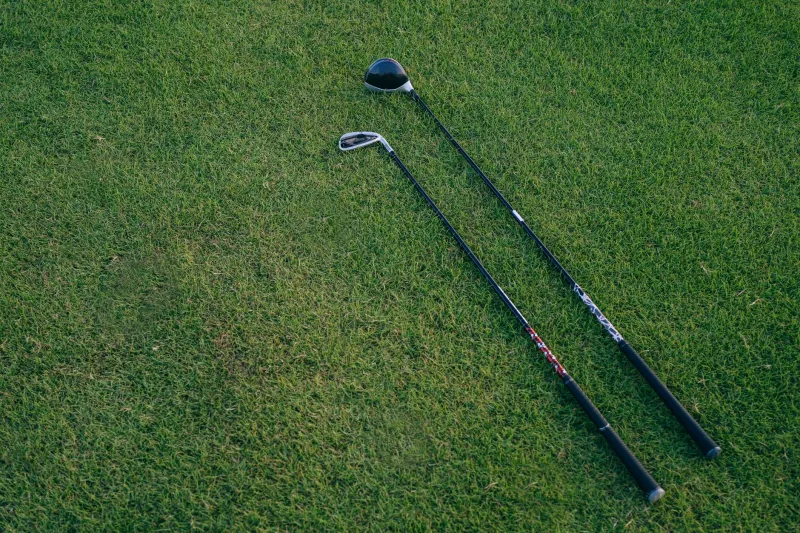
Three Lies, One Voice Note: Sussing Out a Hybrid Before You Pay
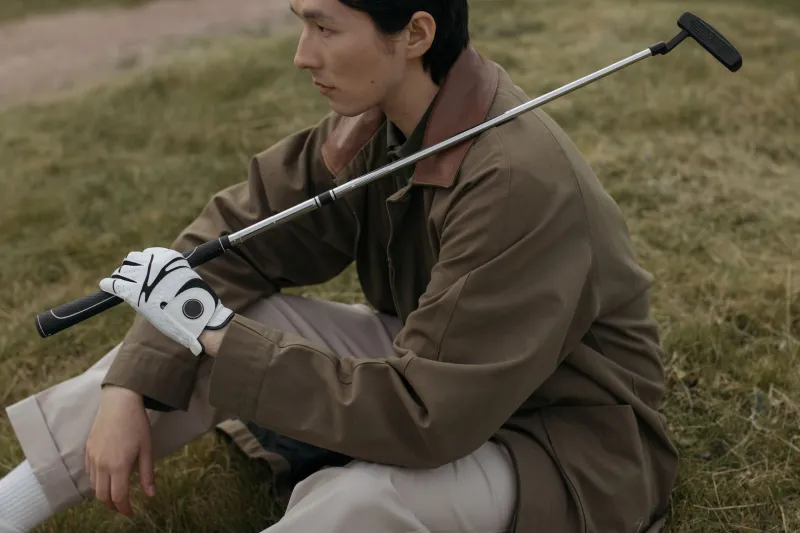
You know the scene. A demo day in late February, a heated bay, a launch monitor showing lovely numbers, and a rescue club that goes tick off the mat like a snooker ball dropping into a pocket. You buy it. Then you take it out on the 14th in November, the ball is sitting down in wet ryegrass, and the club says clunk. Not a disaster, exactly, but not the club you thought you'd bought either.
The mat is the problem. It's firm, flat and honest in a way British turf never is. So instead of trusting one surface, audition the hybrid across three of them — off a tee, off damp fairway, and out of heavy rough — and record the whole thing. It takes twenty minutes, costs nothing, and tells you more about whether the club suits you than a screen full of spin numbers.
What the three lies are actually testing
A hybrid is a head, a shaft and a lump of turf, all arguing with each other at the moment of impact. Sound is the argument, audible. Tee it up and you hear the face and the ball. Put it on wet grass and you hear the sole, the bounce, the shaft loading, and about a third of the energy going somewhere other than the ball. Drop it in rough and you hear the grass first, the strike second, and often nothing at all.
That's three different clubs, acoustically. Any one of them alone is a bad witness.
Setting up the audit
You don't need a studio. You need:
- A phone, using the standard voice recorder, sitting on your bag rather than in your hand. Knee height, about 1.5 metres behind you and slightly to the trail side. Wind is the enemy of outdoor recordings, so either tuck the phone inside a jumper or grab one of those fluffy microphone covers.
- An alignment stick, a spare glove or a tee to mark ball position. Same position every time, or the test is worthless.
- Twelve balls. Three per lie, four lies if you want a reference recording of your current club — and you do.
- A notepad, or the voice note itself. Say the words out loud: "tee, first, sharp", "rough, third, mush". You'll thank yourself later.
Swing normally. Don't try to produce a nice sound — try to produce a repeatable strike. A neutral swing, ball slightly forward of centre from the tee, slightly back on turf.
Lie one: the tee
Tee it low, roughly a centimetre, which is where most of us actually use a hybrid on a tight par four. Hit three balls and listen.
A well-matched hybrid here gives you an energetic crack — short, bright, with a quick decay and no trailing buzz. If the sound hangs around, that's usually shaft vibration coming back up at you, often a tip section that's too soft for your transition. If it's a flat thwack with no sparkle, the face is doing less work than the marketing suggests.
Lie two: damp fairway
This is the important one. From October to March, this is where the club spends its life. Wet parkland turf, ball sitting snugly, exactly the shot you bought the hybrid for.
You're listening for how much of the tee sound survives. Some drop in volume and pitch — that's normal and fine. What you want is definition. A clean, mid-pitched hum with a clear start and a quick settle tells you the sole is gliding rather than digging, the bounce is matched to the turf, and the strike is close to centre. If the sound smears into an indistinct shuffle, the club is bouncing into the ball instead of through it.
Lie three: heavy rough
Wet winter rough is the toughest audience in golf. You will hear the grass — a shhh as the head ploughs through — and then, if you're lucky, the strike. What matters is whether the strike is still audible underneath.
If you can hear a muffled but definite thud, the head has enough mass to fight through. If it goes completely silent, you've learned something useful: in real rough, you'll get no feedback at all, and that's a confidence problem more than a performance one.
The three voices and what they mean
The dull thud. Low, brief, no ring. Usually a deep, low-CG head with a heavier sole and a face that's solid rather than springy — think bonded construction and forgiving geometry. It can be lovely off wet turf and genuinely consistent. But it tells you very little about strike. If you're the sort of player who needs a bit of auditory feedback to know where you hit it, this club will leave you guessing.
The hollow crack. Bright, metallic, almost a crack with a fast decay. That's a thin, high-COR face, often a cup-face design. Fabulous off a tee, can feel brittle off wet fairway, and off low strikes it turns into a clack — which is your warning sign that the sweet spot is small and honest about it.
The clean hum. Mid-pitched, even, short. A slight rise on contact and then nothing. This is head and shaft agreeing with each other, and it usually means the tip profile matches your release and the head is squaring without you having to help it. It's the sound of a club you'll stop thinking about by the third hole, which is the highest praise a hybrid can get.
Shaft pairing is half the soundtrack
Two identical heads with different shafts are two different clubs. A stiff, heavy shaft shortens the sound and lifts the pitch — sometimes into a hard tink on off-centre hits. A light or soft shaft lengthens it, smears it, and can produce a ringing buzz that feels lively in the bay and tiring on the course. Oversized grips mute everything slightly, which is fine, as long as you're not using a grip to fix a sound you don't like.
So before you commit, ask for the same head in a second shaft and record both. Two voice notes, back to back, tells you more than an hour of feel-based second-guessing.
Scoring it before you hand over the card
Keep it to four lines per club: tee, fairway, rough, and your current hybrid as a baseline. Mark each one out of five for consistency, and note whether the pitch changes on off-centre strikes. A club that sounds different on every ball is a club you'll never fully trust.
And if the fitter lets you, take three balls outside the bay onto actual turf. Even a scuffed bit of practice ground next to the car park counts. February grass in Surrey is a far better judge than any mat, and if a hybrid sounds right off a wet fairway in the cold, it'll sound superb in July.
The short version
Record from your bag, not your hand. Three balls per lie, same ball position. Judge definition, not volume. Compare everything against your current club. And remember that a hybrid you don't notice is usually a hybrid you keep.