Zip It, Swing It: How to Audition a Winter Golf Jacket Without Losing Your Strike Feedback

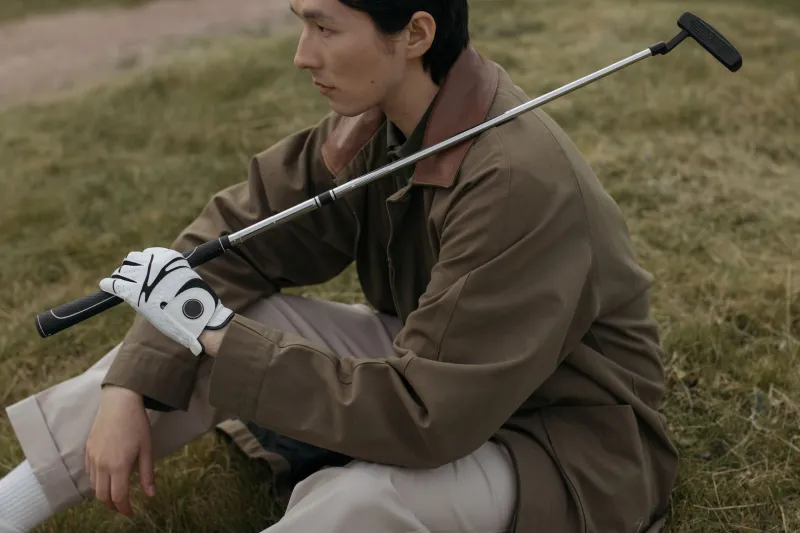
There's a moment in every UK winter round when you zip up and the world goes quiet. Not the chatter on the next fairway, not the drizzle on the brim of your cap — your swing. The jacket rustles, the collar grazes your neck, the sleeves rub against your ribs, and suddenly you're not listening to contact any more. You're listening to your clothing.
At Acustrike Golf we bang on about impact sound because it's one of the cheapest feedback tools you've got. A crisp strike through a wet ball still tells you something. A fat one has a different note. But that channel only works if your gear isn't shouting over it. So before you spend £150 on a waterproof that looks the part in the pro shop, treat the jacket like any other piece of performance kit: swing in it, listen to it, and check what it's hiding.
Why a quiet jacket is a performance purchase
Winter golf already dulls your senses. Cold hands, extra layers, muddy lies, a ball that feels like a pebble. The last thing you need is a face fabric that sounds like a crisp packet every time you take the club back. Impact sound travels through the air and through your body, and a stiff, noisy shell can mask the difference between a thin strike and a slightly heavy one. That matters most with irons and wedges, where you're trying to judge turf contact through damp ground.
A good winter jacket doesn't need to be silent. It needs to get out of the way. That means soft-feeling fabric, a collar that doesn't slap your jaw, sleeves that don't bunch under the arms, and a fit that lets you turn through the ball without feeling like you're inside a tent.
The three noises that cause the most trouble
Crinkle. That papery rustle from a stiff waterproof face fabric. It's worst on the backswing, right when you're trying to feel width and tempo. Some jackets sound loud in the shop and settle down after a few wears, but plenty don't. Squeeze a sleeve, rub two panels together, and listen before you commit.
Collar slap. A high, rigid collar or a bulky zip garage can tap against your neck or chin as you turn. It's not just annoying — it can make you flinch at the top of the backswing without realising it. Zip the jacket all the way up, turn your head left and right, and make a slow rehearsal swing. If the collar catches, it'll catch on the course too.
Sleeve drag. Padded or badly articulated sleeves rub against your torso and each other. That friction adds noise and can subtly restrict your arms. Swing in the jacket with a midlayer underneath — not just a T-shirt — because that's how you'll actually wear it in February.
The pro-shop audition: 90 seconds, no ball needed
You don't need a launch monitor to rule a jacket out. Walk in wearing the midlayer you'd normally golf in. Put the jacket on over the top, then do this:
- Set up in front of a mirror with a 7-iron if the shop will let you hold one.
- Make three slow rehearsal swings at half speed, then three at full speed.
- Zip the collar to the top and repeat, turning your head as you would at the top of the backswing.
- Stand tall, shrug your shoulders, and listen for rustle near your ears.
If you can hear the jacket over your own breathing, it's too loud. If the collar touches your chin at address, it'll drive you mad by the 6th. If the sleeves ride up or bunch at the elbows, try a size or a different cut — don't assume you'll 'get used to it'.
The range test: what to listen for through a bucket
Ask the pro shop whether you can hit a few balls with the tags on, or buy from somewhere with a sensible returns policy. On the range, hit ten wedges and ten mid-irons with the jacket on, then ten of each with it off. Close your eyes between shots and compare. Can you still hear the difference between a clean strike and a slightly heavy one? Does the jacket make every shot sound the same?
You're also checking rhythm. Bulky sleeves and a stiff body can make you steer the club instead of swinging it. If your tempo feels rushed or your finish feels cramped, the jacket is doing more than keeping you dry. That's a performance problem, not just a comfort one.
Layering that stays quiet
You can often solve the noise problem by changing what's underneath the shell. A smooth, thin base layer reduces friction. A fine-gauge knit or light fleece midlayer adds warmth without the rustle of a nylon-filled gilet. Save the bulky padded midlayer for the coldest, driest days, and use a quieter shell over the top when rain is the main threat.
Look for articulated sleeves, a low-profile collar, a two-way zip and cuffs that adjust without hard plastic tabs near the wrist. A soft brushed lining can deaden internal rustle; a crisp mesh lining often doesn't. Hoods are useful in a downpour, but a hood that flaps or rustles on the backswing is a distraction — test it up and down before you buy.
The 2026 winter buying rule
If you can't hear the difference between a thin strike and a fat one through the jacket, leave it on the rail. You can always add a warmer midlayer. You can't add feedback once a noisy shell has smothered it. Pick the quietest jacket that keeps you dry, then build warmth underneath it — your ears, your tempo and your winter league scores will thank you.